Balance Sheet ⇒ simple as that

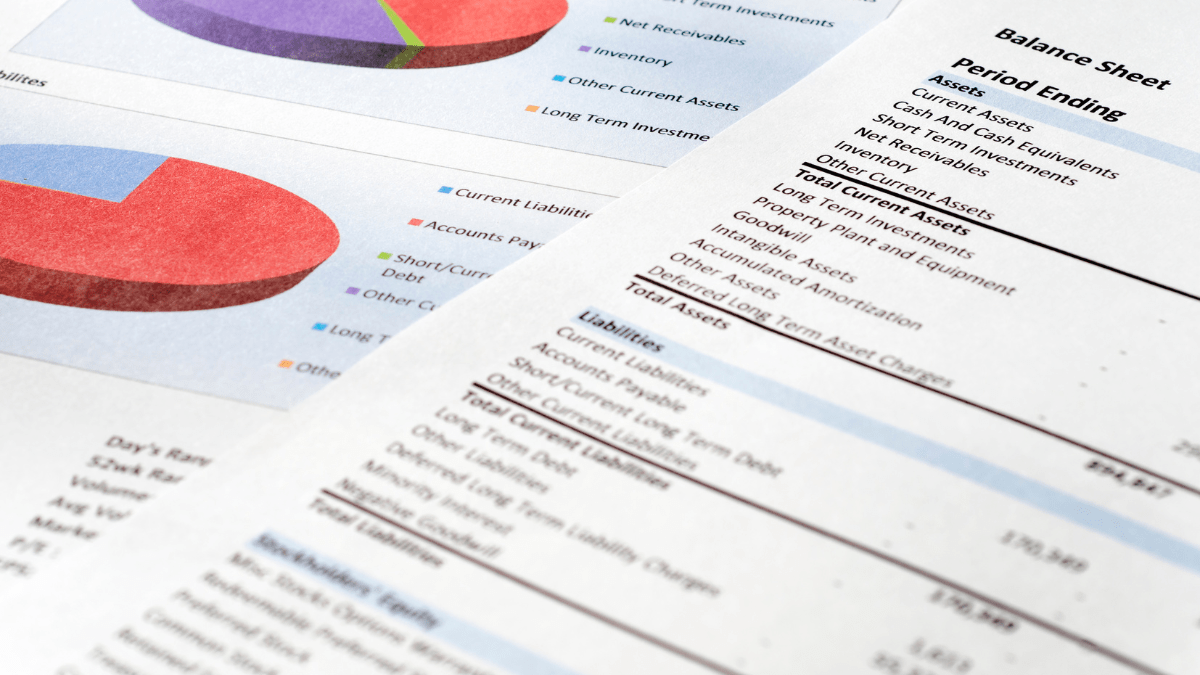
A balance sheet summarizes a business’s assets, liabilities, and equity on a particular reporting date, offering insight into its overall financial position. It presents the company's assets, liabilities and equity, helping business owners, investors, and creditors assess its financial health, determine its net worth, and understand how the business is financed.

Balance Sheet – Important facts

What is a balance sheet?A balance sheet is a financial statement that provides an overview of a company's assets, liabilities, and equity at a specific date, showing its overall financial position.
Why is a balance sheet important?Together with the income statement and other financial statements, the balance sheet forms an important part of financial reporting and helps assess a company's financial health.
How is a balance sheet structured?The assets section shows what the company owns, while the other side presents liabilities and equity. According to the accounting equation, total assets must equal total liabilities plus equity.
What types of balance sheets are there?Common types include opening and closing balance sheets, interim balance sheets, commercial and tax balance sheets, individual and consolidated balance sheets, and special-purpose balance sheets.
What is the purpose of a balance sheet?A balance sheet documents a company's finances, provides information to internal and external stakeholders, and supports profit determination and the assessment of overall financial health.
Balance Sheet

A balance sheet outlines what a business owns and owes, along with its equity, offering a clear view of its financial standing on a particular date.

What is a balance sheet?

A balance sheet is a financial statement that shows a company's financial position at a particular date. It provides an overview of what the company owns and the remaining owner's equity, making it an essential part of external financial reporting.

Unlike the income statement, which records revenues and expenses over a period of time, a company's balance sheet provides a snapshot at a single point in time.

The balance sheet is divided into two sides:

  • The asset side shows the company's assets, including resources such as cash, receivables, and fixed assets.
  • The liabilities and equity side shows the company's obligations and shareholders equity. Liabilities include amounts owed to external parties as well as certain provisions.

The structure is based on the accounting equation:

Assets = Liabilities + Equity

This means that total assets must always equal total liabilities plus total equity, ensuring that both sides of the balance sheet remain balanced.

Types of Balance Sheets

There are several types of balance sheets, each serving a different purpose in financial reporting. Two of the most fundamental types are the opening balance sheet and the closing balance sheet.

Opening and Closing Balance Sheets

An opening balance sheet presents a company's assets, liabilities, and equity at the beginning of a new accounting period. It is used to establish the opening balances of the company's accounts and is based on the closing balance sheet from the previous financial year.

The closing balance sheet, on the other hand, reflects the company's financial position at the end of the reporting period. As a result, the closing balance sheet of one financial year generally becomes the opening balance sheet for the following year.

Annual and Interim Balance Sheets

Annual balance sheets are typically prepared at the end of each financial year and provide an overview of a company's financial position at the relevant reporting date.

Interim balance sheets, by contrast, are prepared between regular annual reporting periods. Depending on the company's needs, they may be created on a weekly, monthly, quarterly, or semiannual basis.

These reports provide a more up-to-date view of a company's financial health and can help management, investors, and other stakeholders monitor changes in the company's assets, liabilities, and equity throughout the year. Interim balance sheets may also be used for specific business events, such as corporate restructuring or assessing financial performance before distributing profits.

Commercial and Tax Balance Sheets

A commercial balance sheet provides shareholders, creditors, and lenders with information about a company's financial position. It is prepared according to the accounting requirements that apply to a company's general financial reporting.

A tax balance sheet, by contrast, is used to determine the financial figures relevant for taxation. It is often derived from the commercial balance sheet but may differ because of specific tax accounting rules.

Individual and Consolidated Balance Sheets

The type of balance sheet required may also depend on the structure and size of a business. A standalone company prepares an individual balance sheet as part of its financial statements.

Groups consisting of multiple companies may prepare a consolidated balance sheet. This combines the relevant financial information of the group entities to provide an overall view of the group's assets, liabilities, and equity.

Special-Purpose Balance Sheets

In addition to regular financial reporting, special-purpose balance sheets may be prepared for specific business events. Examples include the formation, merger, restructuring, or liquidation of a company.

These financial documents are generally created on a one-time or irregular basis and often serve as an important source of information for business decisions.

The Main Functions of a Balance Sheet

A balance sheet serves three key purposes within a business: documentation, profit determination, and financial information. Together with the income statement and cash flow statement, it is one of the most important financial statements for understanding a company's financial position.

Documentation

The balance sheet provides a structured record of a company's financial situation at a specific date. It shows the company's assets, its obligations, and shareholders equity, providing reliable information about the resources the business owns and how they are financed.

However, certain values, such as undisclosed hidden reserves, may not be directly visible on the balance sheet.

Profit Determination

Comparing owner's equity at the beginning and end of an accounting period can provide insight into changes in the company's net worth. Together with the income statement, the balance sheet helps evaluate whether the business generated a profit or loss during the financial year.

Financial Information

For a business owner, the balance sheet is an important tool for evaluating the company's financial health and supporting business decisions. External stakeholders, including suppliers, lenders, investors, and tax authorities, may also use these financial documents to assess the company's stability and creditworthiness.

By providing insight into the company's financial health, liquidity, and ability to meet its obligations, the balance sheet also plays an important role in protecting creditors and evaluating financial risk.

Balance sheet structure: How is a balance sheet organized?

A balance sheet is divided into two main sections: assets on one side and liabilities and equity on the other. Together, these sections provide a clear overview of a company's financial position at a particular reporting date.

  • The assets section shows how a company uses its available funds and lists the economic resources the business owns or controls. 

Typical examples include current assets, fixed assets, prepaid expenses, and other long-term assets. This side of the balance sheet therefore provides insight into the structure and distribution of the company's assets.

The other side explains how these assets are financed. It includes shareholders equity as well as the obligations the company owes to external parties, which may be divided into current liabilities and non-current liabilities.

  • In simple terms, the asset side shows where a company's funds have been invested, while the liabilities and equity side shows where the financing comes from.

According to the accounting equation, total assets must always equal total liabilities plus total equity.

Balance Sheet Items: What Is Included?

Similar financial items are grouped together on a balance sheet to provide a clear overview of the resources a company controls and the sources used to finance them. These items are organized into assets, liabilities, and equity.

Assets on the Balance Sheet

The assets section includes both current assets and non-current assets.

Noncurrent assets are resources intended to support the business over the long term. They may include intangible assets, fixed assets, financial investments, and intellectual property.

Current assets are assets that a company expects to realize within one year by using them, selling them, or converting them into cash. Common examples include:

  • Inventory
  • Marketable securities
  • Cash equivalents and balances in a cash account
  • Accounts receivable
  • Other short-term liquid assets

Liabilities and equity on the balance hheet

The other side of the balance sheet presents shareholders equity and liabilities.

  • Equity may include share capital, capital reserves, retained earnings, and accumulated profits or losses. It represents the owners' remaining interest in the business after liabilities are deducted from total assets.

Liabilities represent amounts the company owes to external parties. They can include provisions, accounts payable, bank loans, bonds, and customer deposits. Depending on when they are due, they are generally classified as current liabilities or noncurrent liabilities.

The company's profit or loss ultimately affects the equity section of the company's balance sheet, with accumulated profits generally reflected in retained earnings.

How to Prepare a Balance Sheet

Accurate bookkeeping throughout the financial year provides the foundation for preparing a balance sheet at the end of the reporting period. The process begins by reviewing the company's records and verifying the company's assets and obligations as of the relevant reporting date.

  • The recorded assets are compared with the results of the physical inventory, and the accounts used in double-entry bookkeeping are closed. 

The verified figures are then classified and presented as assets, liabilities, and equity.

The amounts reported in each section of the company's balance sheet are based on the financial transactions recorded throughout the accounting period. To ensure accuracy, the final statement must follow applicable accounting principles and the fundamental accounting equation, under which total assets must equal liabilities plus equity.

Practical Example of a Balance Sheet

At the end of a financial year, a company prepares its closing balance sheet as part of its annual financial statements. Together with the income statement and other relevant financial documents, it provides an overview of the company's financial position at a specific date.

The following simplified example shows the closing balance sheet of Hauser & Co GmbH as of December 31, 2025:

AssetsAmountLiabilities and EquityAmount
Non-current assets Shareholders' equity€300,000
Land and buildings€250,000Provisions 
Machinery and equipment€90,000Pension provisions€80,000
Furniture and office equipment€35,000Other provisions€20,000
Current assets Liabilities 
Raw materials and supplies€220,000Long-term bank debt€500,000
Work in progress€100,000Short-term bank debt€70,000
Finished goods€90,000Other liabilities€50,000
Marketable securities€15,000  
Accounts receivable€150,000  
Cash at bank€70,000  
Total assets€1,020,000Total liabilities and equity€1,020,000

This example demonstrates the basic accounting principle that a company's total assets must always correspond to the combined value of its liabilities and equity.

The closing balance sheet at the end of one financial year generally provides the opening balances for the beginning of the following financial year.

How to Analyse a Balance Sheet

A balance sheet tells investors and every business owner more than simply what a company owns and owes. By examining the business's assets, liabilities, and owner's equity, users can assess the company's liquidity, overall company's health, and level of financial leverage.

  • The balance sheet should also be analyzed alongside the cash flow statement, income statement, and other financial documents to gain a complete picture of financial performance.

One of the most useful financial ratios is the current ratio, which compares current assets with current liabilities. These liabilities represent short-term obligations due within one year and may include accounts payable, wages payable, and the current portion of long-term debt.

  • The ratio helps indicate whether a company has enough short-term resources to cover upcoming obligations.

Assets are generally arranged according to liquidity, with the most liquid assets appearing before less liquid resources. Long-term resources, known as noncurrent assets, are expected to provide value for more than a year and may include long-term assets, long-term investments, property, equipment, and intellectual property.

  • When reviewing receivables, companies may also account for doubtful accounts to reflect amounts they may not be able to collect.

On the liabilities side, noncurrent liabilities, or long-term liabilities, include obligations that are generally due after more than one year, such as long-term debt. Comparing these obligations with assets and equity helps determine the company's net assets and assess its long-term financial stability.

The balance sheet can also be used together with net income and cash flow data to understand how efficiently a company takes its available resources and turns them into financial results. Analysts often compare these figures with businesses in the same industry, as financial structures and typical ratios can vary significantly between sectors.

  • Depending on where a business operates, its financial reporting may follow different accounting frameworks, including the International Financial Reporting Standards.

Regardless of the applicable standards, the basic accounting relationship remains the same: owner's equity can be understood as equal assets minus liabilities, while the balance sheet itself follows the principle that assets equal liabilities plus equity. This allows users to evaluate what a company expects to receive or use in the future and how those resources are financed.

Comprehensive accounting software for Austria and Germany:

  • Accounting and controlling
  • Quick recording of income and expenses
  • Automatic document capture with PaperCut App
  • Master data and automation
  • Tax office reports with direct connection
  • Save costs and time | efficient accounting

Frequently Asked Questions

A balance sheet contains a company's assets, liabilities, and equity at a specific point in time. It typically includes current assets, noncurrent assets, current liabilities, long-term liabilities, and shareholders' equity, providing an overview of the company's financial position.

A balance sheet is divided into three main sections: assets, liabilities, and equity.

  • Assets show what the company owns, liabilities represent what it owes, and equity reflects the owners' remaining interest in the business.

These figures follow the accounting equation: Assets = Liabilities + Equity.

The five main categories commonly used to analyze a balance sheet are current assets, noncurrent assets, current liabilities, noncurrent liabilities, and equity.

Together, they help assess liquidity, solvency, and financial stability. Ratios such as the debt ratio, which compares total liabilities with total assets, can provide further insight into how much of a company's assets are financed through debt.

The main purpose of a balance sheet is to provide a snapshot of a company's financial position at a specific point in time. It helps business owners, investors, and creditors evaluate the company's assets, obligations, liquidity, and overall financial health.

Weitere spannende Themen